Where the plains run to the horizon and the Migration moves like weather across the land.
If Kenya is the birthplace of safari, Tanzania is its grandest stage. The Serengeti runs to the horizon. The Ngorongoro Crater holds an entire ecosystem within its volcanic walls. The country is vast — twice the size of California — and holds within it landscapes so distinct they could each belong to different continents.
We have walked Tanzania's northern circuit from end to end, and we know the southern reserves — Ruaha, Selous, Katavi — that most operators never reach. The choice between north and south defines the trip: north for the iconic, south for the wild.
Pair the northern circuit with Zanzibar for the classic bush-and-beach finale, or fly south for true wilderness without another vehicle in sight. Either way, this is Africa at its most cinematic.
The endless plain. Africa's most famous ecosystem and the great stage of the Migration. We work with mobile camps that follow the herds month by month.
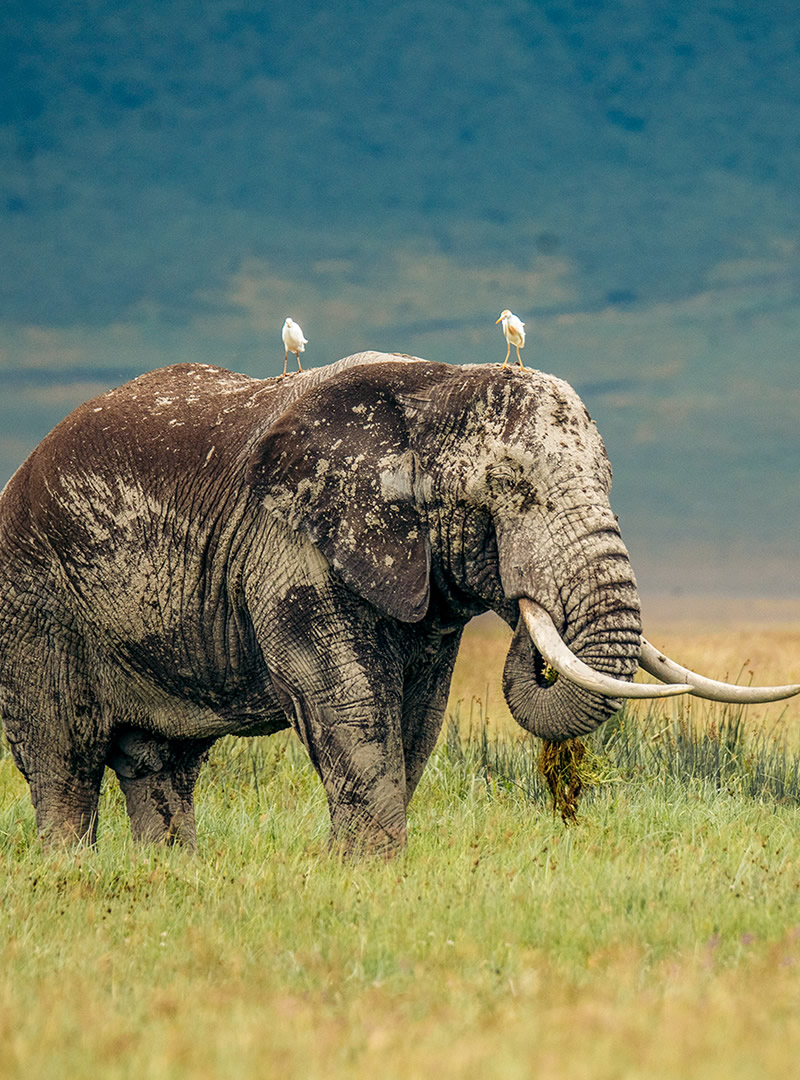
The crater. A 260-square-kilometre volcanic caldera holding an entire ecosystem — lions, elephants, black rhino, and Maasai cattle, all in concentrated harmony.
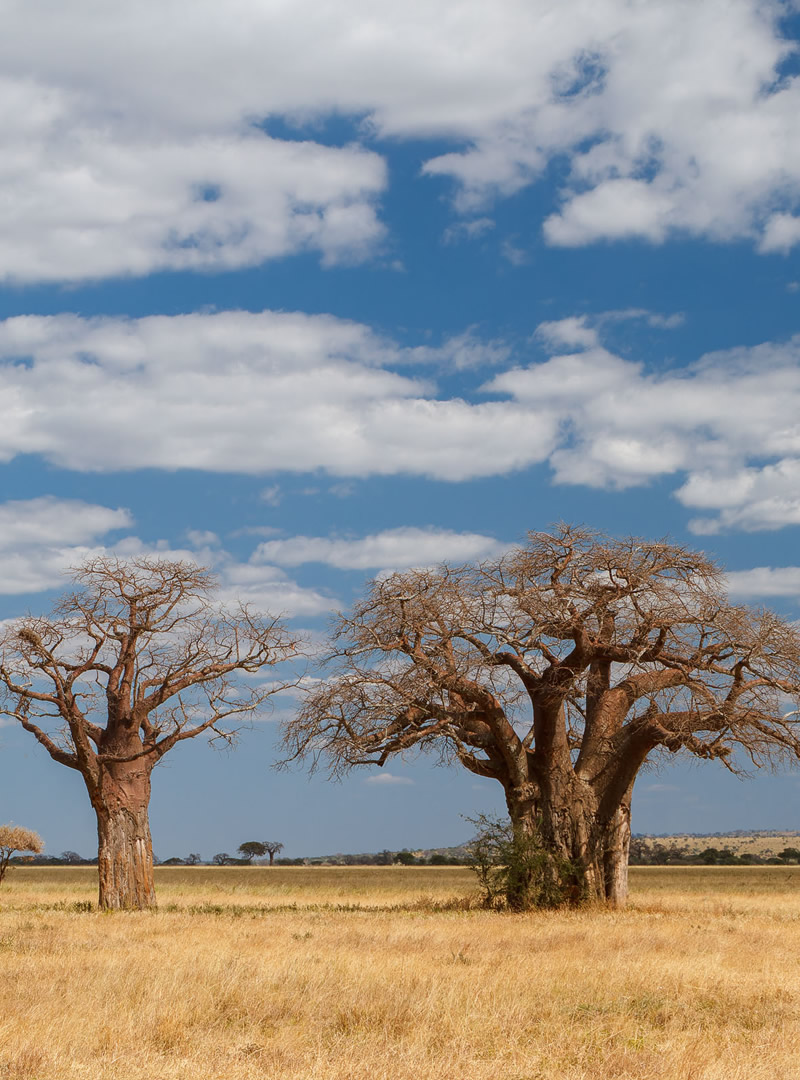
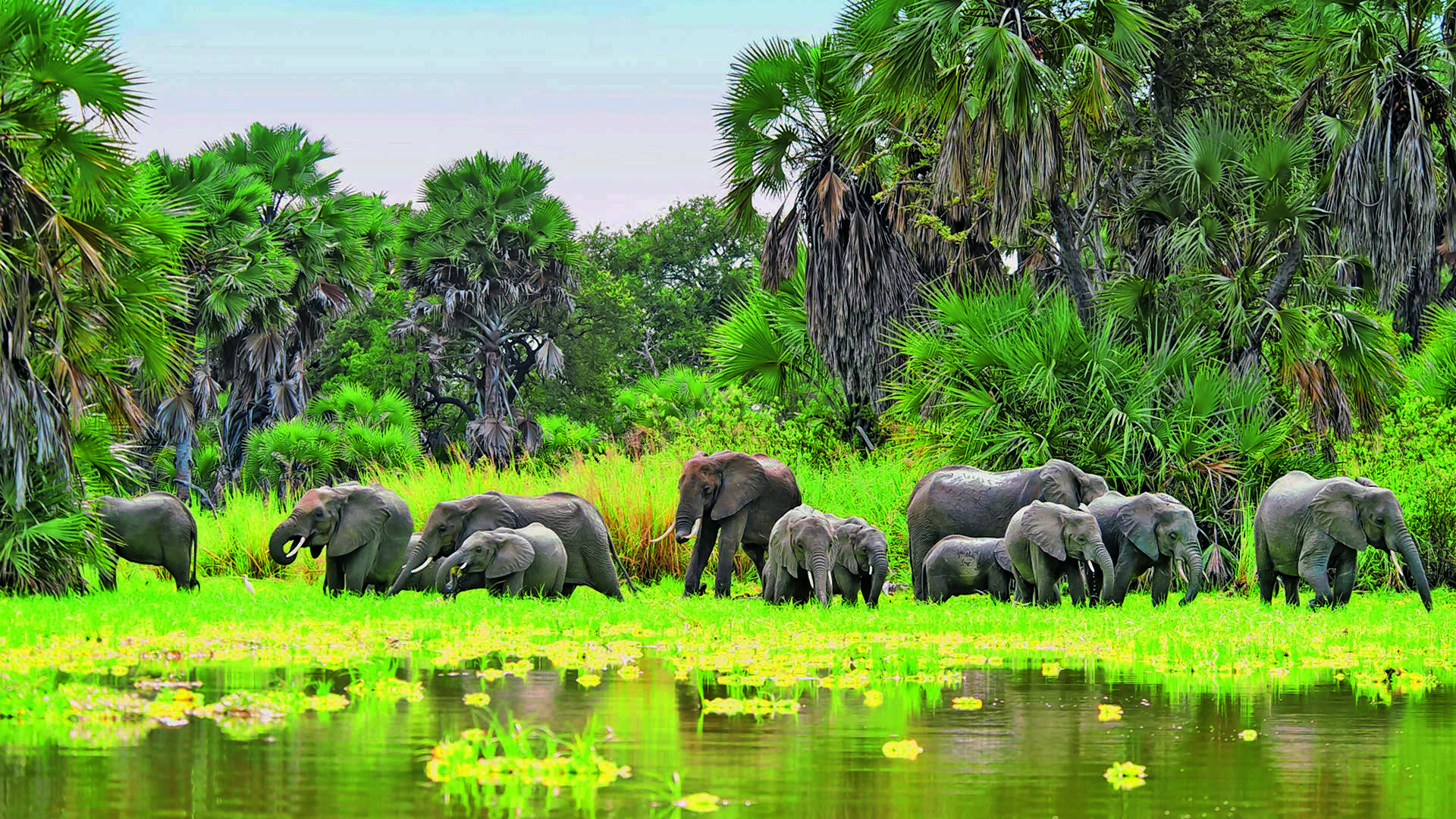
The elephant kingdom. Ancient baobabs, vast herds, and a quieter alternative to the Serengeti — particularly stunning in the dry season, July through October.
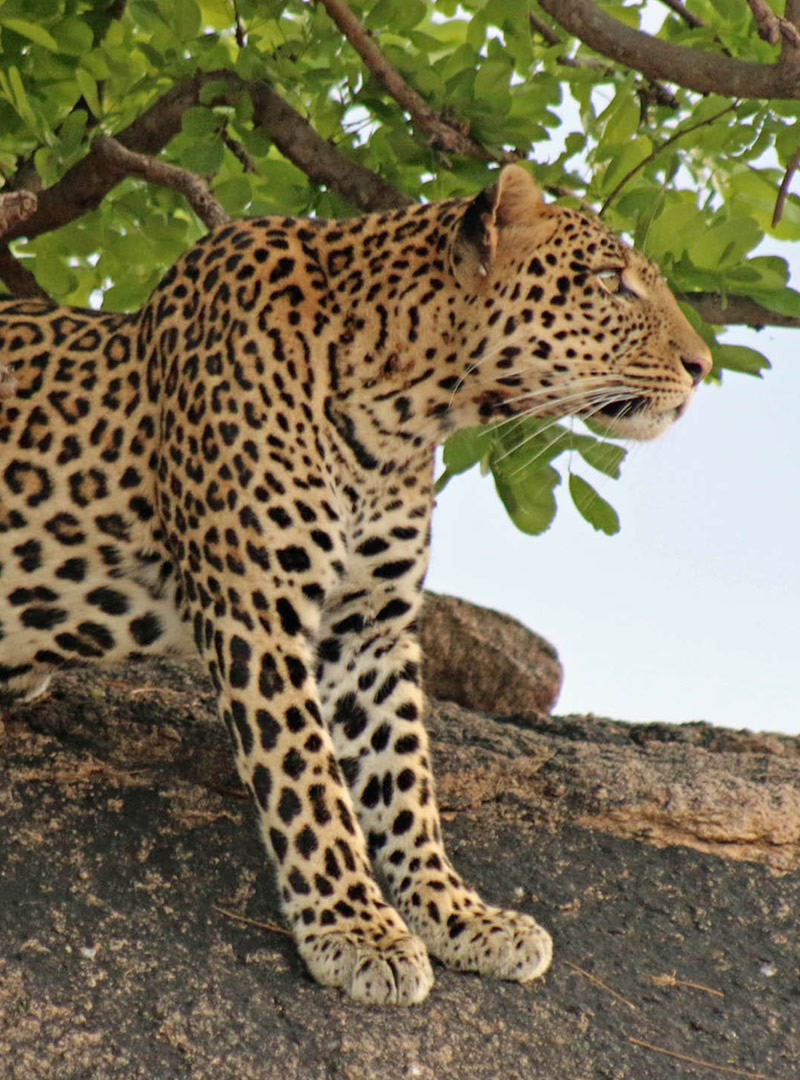
The wild south. Tanzania's largest national park and one of the last truly remote safari destinations — exceptional predator density, almost no other vehicles.
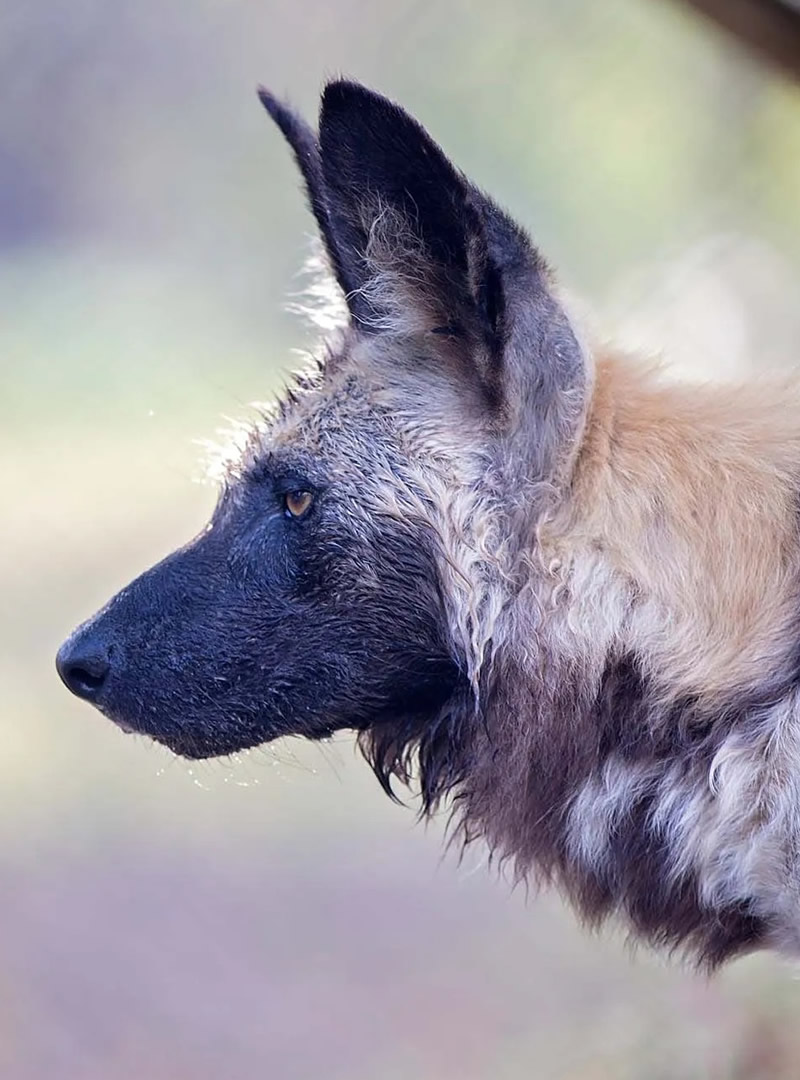
The Nyerere reserve. Walking safaris, boat safaris on the Rufiji, and a sense of scale that the northern circuit cannot match. For seasoned safari-goers.
The chimpanzee mountains. Track wild chimpanzees on the forested slopes of Lake Tanganyika — one of Africa's most singular and remote wildlife experiences.
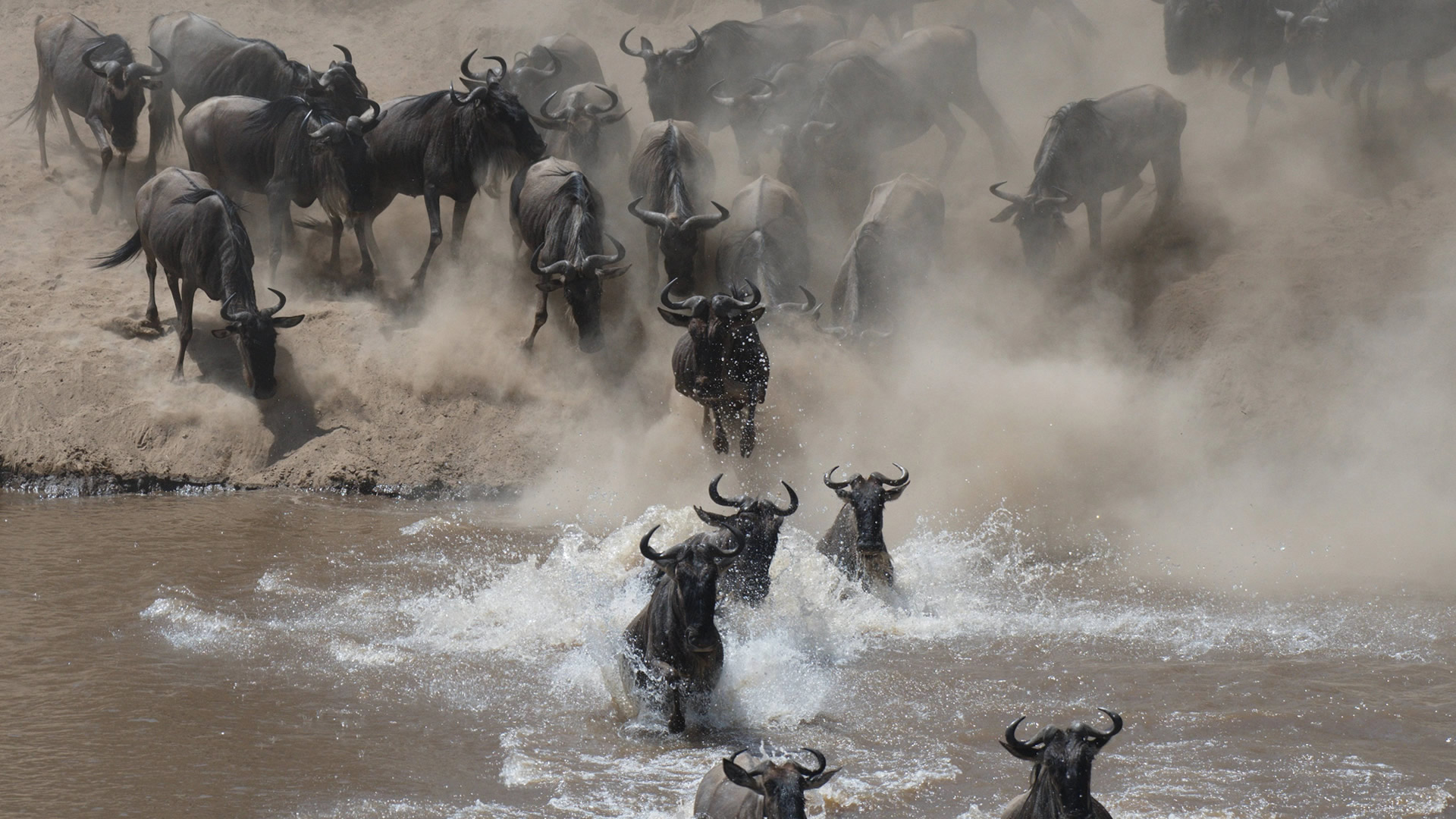
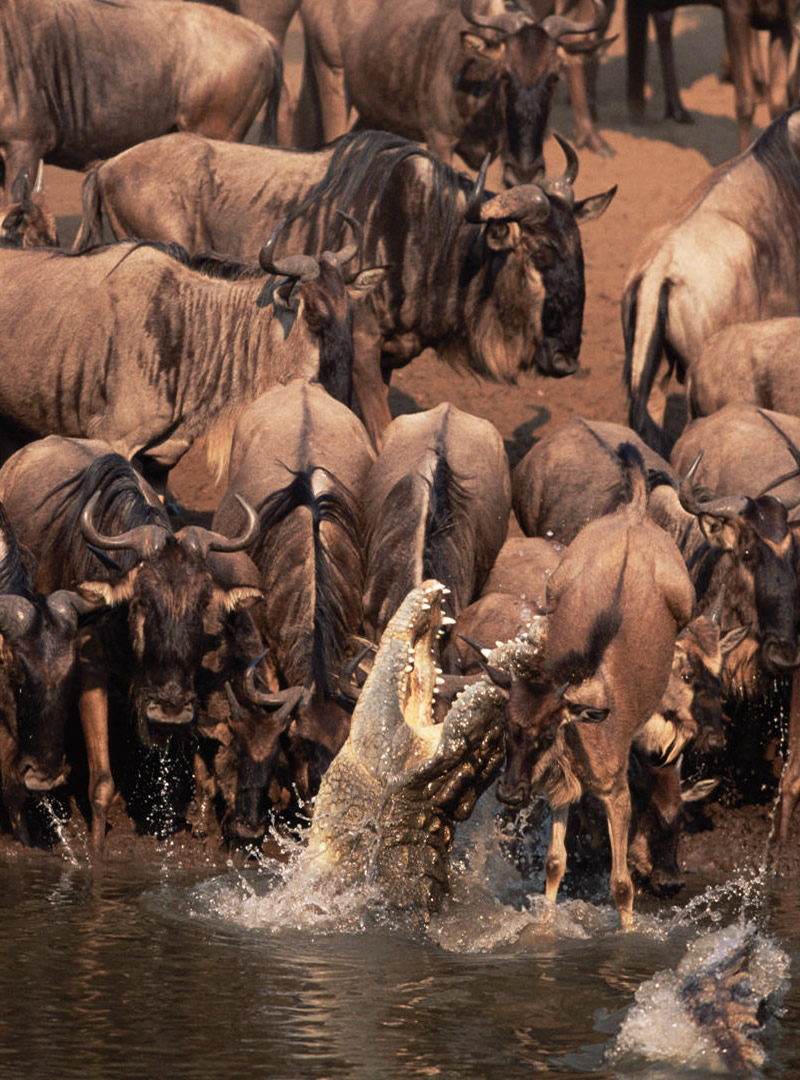
From the calving plains of the southern Serengeti to the Mara River crossings, Tanzania holds the Migration for nine months of the year.
Ngorongoro is unique in the world — a self-contained ecosystem inside a volcanic caldera, with the highest density of large mammals in Africa.
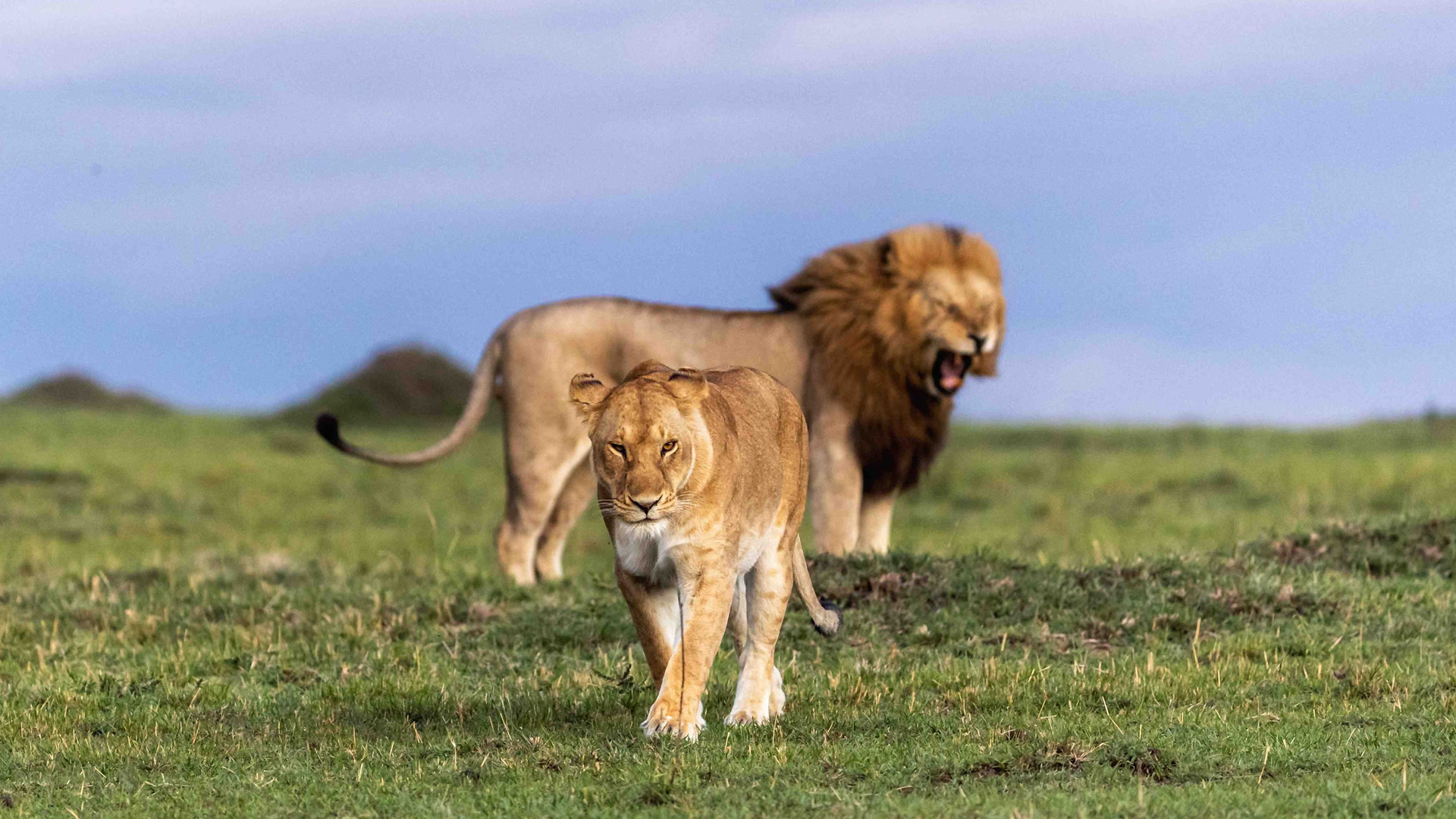
Ruaha, Selous, and Katavi offer wilderness on a scale almost extinct elsewhere — fewer than ten vehicles in areas the size of small countries.
The southern reserves permit walking safaris and boat-based game viewing — an entirely different way to experience Africa.
Track wild chimpanzees in the forests of western Tanzania — a journey few travellers ever take, and none forget.
Tanzania's Indian Ocean archipelago is a 90-minute flight from the Serengeti — the most natural bush-and-beach pairing in Africa.
The northern circuit at its best — Migration river crossings in the northern Serengeti, dry-season game viewing across Tarangire and Ngorongoro.
The southern Serengeti's calving grounds, when half a million wildebeest give birth in a matter of weeks. Predators in full action.
The long rains. Camps in the south often close, but the northern circuit becomes lush, dramatic, and almost empty. Excellent value.
Brief afternoon showers, green landscapes, and the Migration moving south. A quieter, more atmospheric time to travel.
Track the Migration through the Mara, the Serengeti, and the Ngorongoro Crater on a fly-in journey timed precisely to the herds.
Amboseli, the Masai Mara, the Serengeti, and Ngorongoro — Kenya and Tanzania's greatest landscapes, on a single grand circuit.
Ruaha and Selous on a fly-in journey designed for travellers who want true wilderness — walking safaris, river boats, and almost no other guests.
The classic Tanzanian pairing — the Migration in the Serengeti, then a barefoot week on a private island off Zanzibar.
Share a few considered details, and your Safari Advisor will be in touch within 24 hours.